
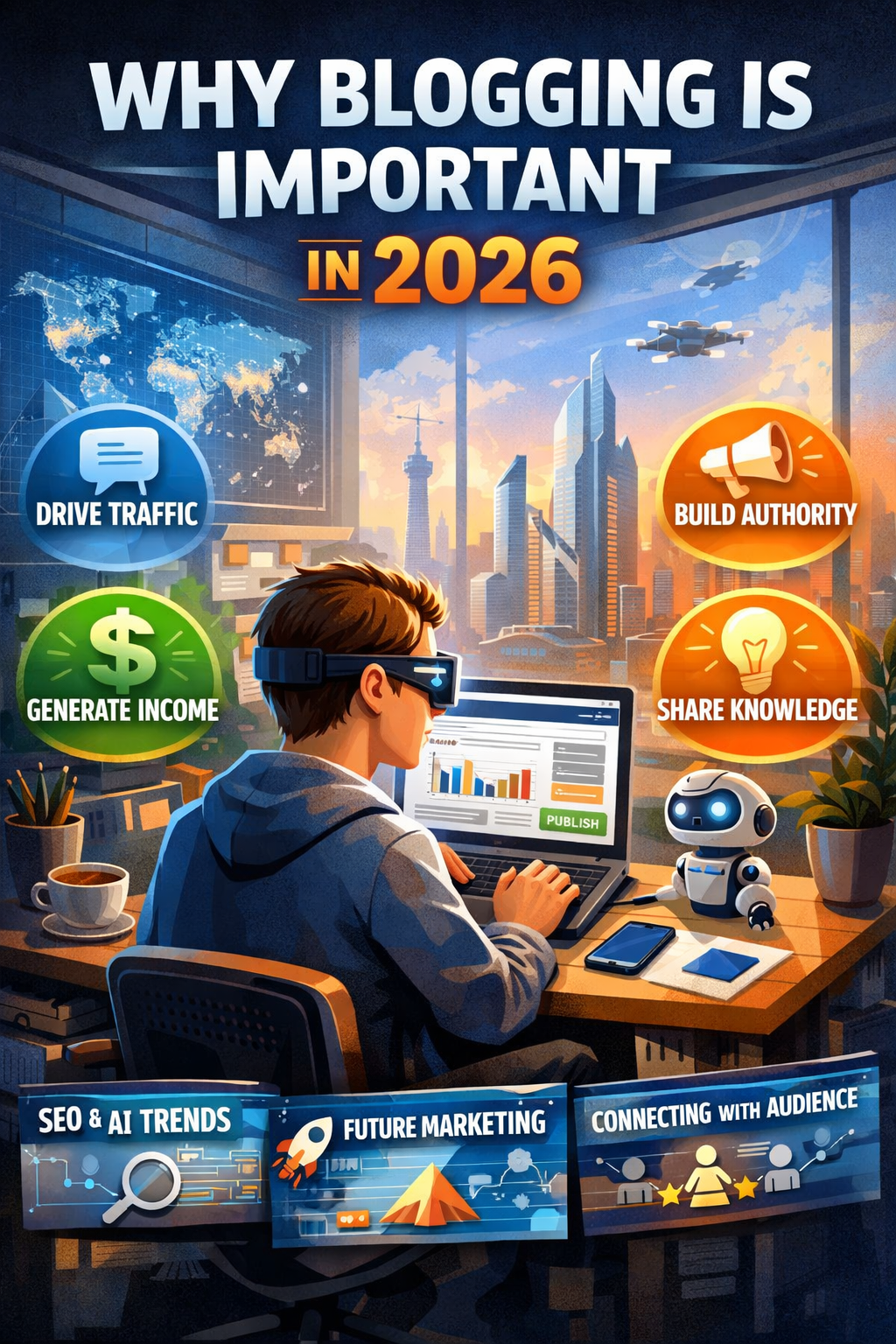
A few days ago, I wrote a small post on the evolution of Digital Marketing and its transformation during the last two decades. And today I thought to share something on Blogging Tips. Here is my blog post on why Blogging is Important in 2026: 15 Proven Benefits That Drive Real Results for Your Business.
In my 20+ years as a digital marketing consultant, SEO strategist, and full-time blogger, I’ve witnessed the evolution of the internet from dial-up forums to AI-powered search experiences. One constant has remained: blogging works. Despite predictions of its demise—first from social media, then video, and now generative AI—blogging is more relevant and profitable than ever in 2026.
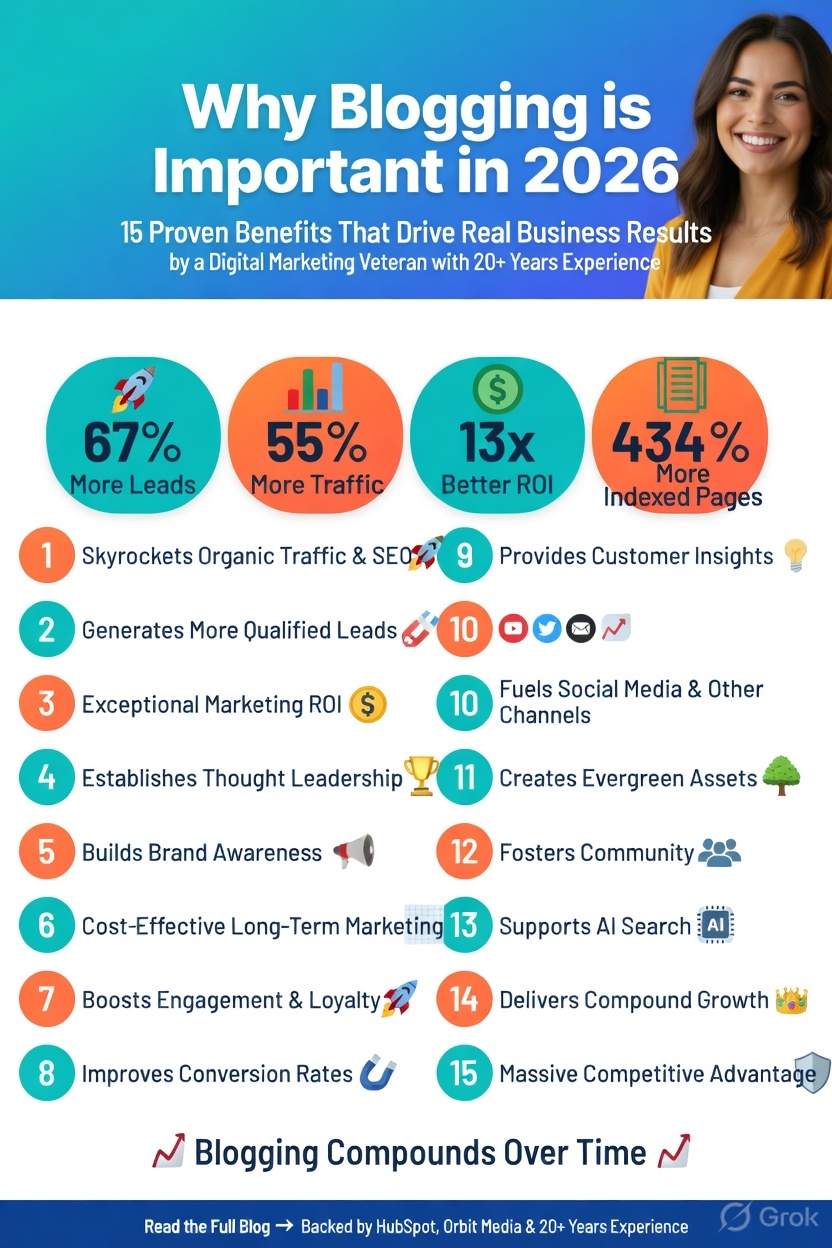
Businesses with active blogs generate 67% more leads than those without them. They’re also 13 times more likely to see positive marketing ROI. Companies that publish consistently see 55% more website traffic and 434% more indexed pages. These aren’t outdated stats from 2015—they’re fresh 2025–2026 benchmarks from HubSpot, Orbit Media, and Demand Metric.
Blogging isn’t just “content for the sake of content.” especially in 2026. It’s a strategic asset that compounds over time, builds unbreakable authority, and delivers measurable business growth. Whether you run a small e-commerce store, lead a B2B SaaS company, or are building a personal brand, a well-executed blog becomes your most powerful, owned marketing channel.
In this ultimate guide, I’ll break down exactly why blogging is important in today’s landscape and reveal the 15 most impactful benefits I’ve seen deliver results for my clients and my own sites. By the end, you’ll understand why I still dedicate 60% of my marketing budget and time to blogging—and why you and your company should too.
Why Blogging Remains More Important Than Ever in 2026
The digital ecosystem has changed dramatically. Google’s Search Generative Experience (SGE), AI overviews, voice search, and zero-click answers have shifted how people discover information. Yet high-quality blog content is precisely what feeds these AI systems and traditional search engines alike.
Search engines and AI tools crave fresh, authoritative, experience-backed content. A static website or product page can’t compete. Blogs provide the depth, context, and topical authority that both algorithms and humans reward.
From my experience optimizing sites that have scaled from 10K to over 1M monthly organic visitors, consistent blogging does three things no other channel matches:
- It creates evergreen assets that generate traffic and leads for years.
- It establishes topical authority that elevates your entire domain.
- It delivers compound ROI—every post you publish makes the previous ones more valuable through internal linking and backlink momentum.
Blogging has never been about quick wins. It’s about building a moat in an increasingly noisy digital world.
The 15 Powerful Benefits of Blogging (Backed by Data and Real-World Results)
Here are the 15 benefits I’ve personally leveraged and helped clients achieve. Each one includes actionable insights from my two decades in the trenches.
1. Skyrockets Organic Traffic and SEO Performance
Businesses that blog see an average 55% increase in website visitors. Sites with blogs generate 434% more indexed pages, giving search engines far more reasons to rank you. In 2026, my own niche sites still derive over 70% of traffic from organic search, with older posts (3+ years) often accounting for 60-80% of that traffic.
Blogging lets you target long-tail keywords, answer real user questions, and build topical clusters. One client in the SaaS space added 25 pillar-cluster posts in 2025 and saw a 312% traffic increase within nine months—without increasing ad spend.
2. Generates Significantly More Qualified Leads
Here’s the number that still blows my mind: companies with blogs generate 67% more leads than those without. B2B companies with active blogs see even higher lifts.
Why? Blog posts attract people actively researching solutions. A well-placed lead magnet (ebook, checklist, webinar) at the end of an in-depth post converts readers who are already warm. I’ve seen conversion rates from blog traffic hit 8-12% when the content aligns perfectly with the offer—far higher than cold social ads.
3. Delivers Exceptional Marketing ROI
Marketers who prioritize blogging are 13x more likely to see positive ROI. In HubSpot’s latest State of Marketing report, blog posts ranked among the top 5 highest-ROI content formats, and website/blog/SEO remains the #1 ROI-generating channel overall.
Unlike paid ads that stop the moment you stop paying, blog traffic compounds. My first blog post from 2008 still drives leads today.
4. Establishes You as a Thought Leader and Authority
In an era of AI-generated fluff, authentic expertise wins. Consistent blogging positions you (or your brand) as the go-to expert in your niche. Google and AI systems reward E-E-A-T (Experience, Expertise, Authoritativeness, Trustworthiness)—and nothing demonstrates that better than a library of helpful, original content.
Clients routinely tell me they landed high-ticket deals because a prospect “read every blog post on your site.”
5. Builds Brand Awareness at Scale
Every blog post is a new opportunity to get discovered. With over 600 million blogs publishing millions of posts daily, standing out requires strategy—but the payoff is massive. Brands that blog see higher brand recall and trust signals across the customer journey.
6. Creates Cost-Effective, Long-Term Marketing
Blogging is one of the most affordable high-ROI channels. After the initial time investment, your content works 24/7. Compare that to paid search or social ads that require constant funding. Small businesses especially benefit—many of my clients achieve 126% higher lead growth through blogging versus traditional advertising.
You might also like why having a free blog is wrong?
7. Boosts Engagement and Customer Loyalty
Blogging isn’t one-way communication. Comments, social shares, newsletter sign-ups, and repeat visits turn readers into community members. I’ve built email lists of 50,000+ subscribers almost entirely through blog-driven lead magnets.
8. Improves Conversion Rates Across the Funnel
Blog content addresses every stage of the buyer’s journey—awareness, consideration, and decision. Educational posts attract top-of-funnel traffic; comparison guides and case studies nurture middle and bottom-funnel prospects. One e-commerce client saw a 41% increase in conversion rate after implementing a content upgrade strategy on their blog.
9. Provides Actionable Data and Customer Insights
Every post gives you analytics gold: what topics resonate, which questions people ask, and where they drop off. I use this data to refine products, create new offers, and even guide product development. Google Analytics + Search Console + blog comments = your best focus group.
10. Supercharges Social Media and Other Channels
Blog posts become the fuel for LinkedIn, X, Pinterest, YouTube, and email campaigns. One high-performing post can generate dozens of social assets. Many of my clients’ best Instagram Reels and LinkedIn carousels started as blog research.
11. Builds a Library of Evergreen Assets
Unlike trending TikToks or daily Instagram posts, a well-optimized blog post can rank and convert for a decade. Successful Bloggers update their cornerstone articles every 12-18 months and watch traffic multiply.
12. Fosters Genuine Community and Relationships
Blogging humanizes your brand. Readers connect with your voice, stories, and expertise. Many of my longest-term clients and collaborators first discovered me through a specific blog post.
13. Supports Emerging Trends Like AI Search
In 2026, AI overviews and generative search are pulling heavily from authoritative blog content. Sites with strong blogging programs are seeing citations and traffic from AI tools. The brands winning here are the ones publishing in-depth, experience-rich content—not thin AI-generated pages.
14. Delivers Compound Growth Over Time
The real magic happens after 50–100 posts. Internal linking creates a content flywheel. Backlinks accumulate. Domain authority grows. Traffic compounds. One client went from 2,000 to 85,000 monthly visitors in 18 months purely through consistent blogging + SEO.
15. Gives You a Massive Competitive Advantage
While your competitors chase short-term social trends or expensive ads, you’re building an owned asset they can’t replicate. In saturated industries, the businesses with the strongest content libraries dominate search results and customer trust.
How to Start (or Level Up) Your Blog in 2026: My Veteran Playbook
After two decades, here’s what actually works:
Choose the right platform — WordPress remains king for SEO flexibility. You can also read: How to Create a Blog from Scratch?
Focus on quality over quantity — Aim for 1,500–3,000+ word in-depth posts that fully answer user intent.
Build topical clusters — One pillar page + 8-12 cluster posts around core topics.
Optimize ruthlessly — Proper on-page SEO, internal linking, schema, and fast load times.
Promote strategically — Email list + social + outreach for initial traction.
Update old content — This is often the highest-ROI activity (71% of bloggers do this successfully).
Stay consistent — 4-8 posts per month beats sporadic publishing.
Common Blogging Mistakes to Avoid
- Publishing thin, AI-generated content without human insight.
- Ignoring mobile experience and page speed.
- Forgetting to include clear calls-to-action.
- Neglecting internal linking.
- Chasing viral trends instead of solving real problems.
You might also like this blog post of mine, in which I discussed about three things:
- Free Blogs Vs. Self-Hosted Blogs
- Length of a Blog Post
- Comments on Blog
The Bottom Line: Blogging Is Your Best Long-Term Investment
Blogging isn’t dead—it’s evolved. In 2026, it’s the foundation of sustainable digital marketing. It builds assets that pay dividends for years, establishes authority that AI and search engines reward, and delivers ROI that outpaces almost every other channel.
I’ve seen it transform solopreneurs into 7-figure businesses, help B2B companies slash customer acquisition costs, and turn personal brands into industry leaders. The data doesn’t lie, and neither does two decades of results.
If you’re not blogging consistently yet, the time to start is now. Your future self—and your bottom line—will thank you.
Ready to build your own high-performing blog? Drop your biggest blogging question or challenge in the comments below. I read every single one and often turn the best questions into future posts.
What’s stopping you from starting (or doubling down on) your blog in 2026?
Leave a Reply